
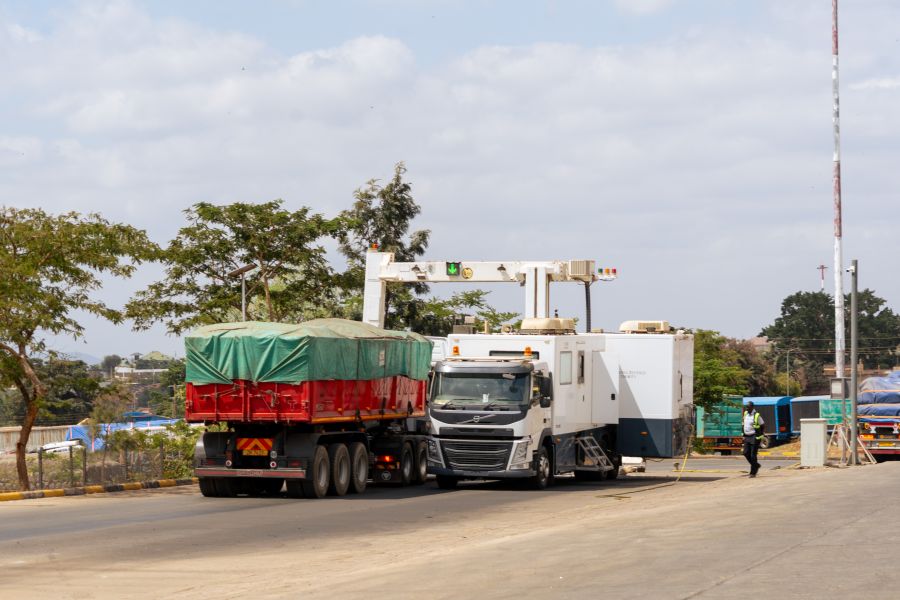
The East African Community (EAC) has called for a new phase of border reforms, urging member states to adopt smarter technologies and modern systems to manage rising trade volumes and cross-border movement.
The call follows a monitoring and fact-finding mission by the EAC Secretariat at the Horohoro/Lungalunga and Namanga/Namanga One Stop Border Posts (OSBPs) in Kenya and Tanzania, where officials assessed border performance and the implementation of the EAC Simplified Trade Regime (STR) aimed at easing trade for small-scale cross-border traders.
The mission was led by EAC Deputy Secretary General for Customs, Trade and Monetary Affairs Annette Ssemuwemba, who said the OSBP model has significantly reduced delays by allowing agencies from neighbouring countries to operate under one roof.
However, she said increasing trade volumes require more advanced border management systems.
“The One Stop Border Posts have delivered tangible benefits in facilitating trade and the movement of people. However, increasing trade volumes require us to modernise our border operations through business process re-engineering, digitalisation, coordinated border management and greater use of risk-based controls,” Ssemuwemba said.
She said partner states need to strengthen coordination among government agencies operating at border posts, invest in modern infrastructure, address staffing shortages and accelerate automation of customs and clearance processes.
The assessment found that both Namanga and Horohoro/Lungalunga border posts continue to play a key role in regional trade, recording increased cargo volumes, passenger traffic and revenue performance under the EAC Customs Union and the OSBP framework.
At Namanga OSBP, officials reported that about 66,500 cargo trucks, 23,000 private vehicles and 48,400 export consignments had been processed in the past 12 months.
Passenger clearance currently takes an average of three minutes, while private vehicles are processed in about 15 minutes. The border also provides 24-hour passenger services to facilitate movement between Kenya and Tanzania.
At Horohoro/Lungalunga, authorities reported growth in cargo and passenger traffic, attributing the improvement to better cooperation between Kenyan and Tanzanian agencies, improved clearance coordination and implementation of the Simplified Trade Regime.
The STR allows small-scale traders to access simplified customs procedures and exemptions for qualifying goods, reducing the cost and complexity of cross-border trade.
Despite the progress, the mission identified several challenges affecting the efficiency of border operations.
Stakeholders raised concerns over delays caused by multiple regulatory approvals, with traders still required to obtain clearance from several government agencies even after improvements in customs procedures. The delays increase transport costs, storage charges and delivery times, especially for perishable goods.
Officials also cited shortages of customs officers and other border personnel, particularly during peak trading periods, as a factor slowing cargo and passenger processing.
The assessment further highlighted limited truck parking space, inadequate cargo scanners and weighbridges, ageing facilities, poor passenger waiting areas, sanitation challenges and the absence of customer help desks as barriers to efficient border management.
During a visit to Namanga OSBP, the EAC welcomed Tanzania’s allocation of Tsh600 million in the 2026/27 financial year for construction of a new truck parking yard, saying the investment would help reduce congestion and improve border efficiency.
The monitoring exercise will continue at Kobero-Kabanga, Rusumo-Rusumo, Mirama Hills-Kagitumba and Gatuna-Katuna One Stop Border Posts.
The findings will guide future reforms aimed at strengthening the EAC Customs Union, improving border performance and boosting intra-regional trade and economic integration.
